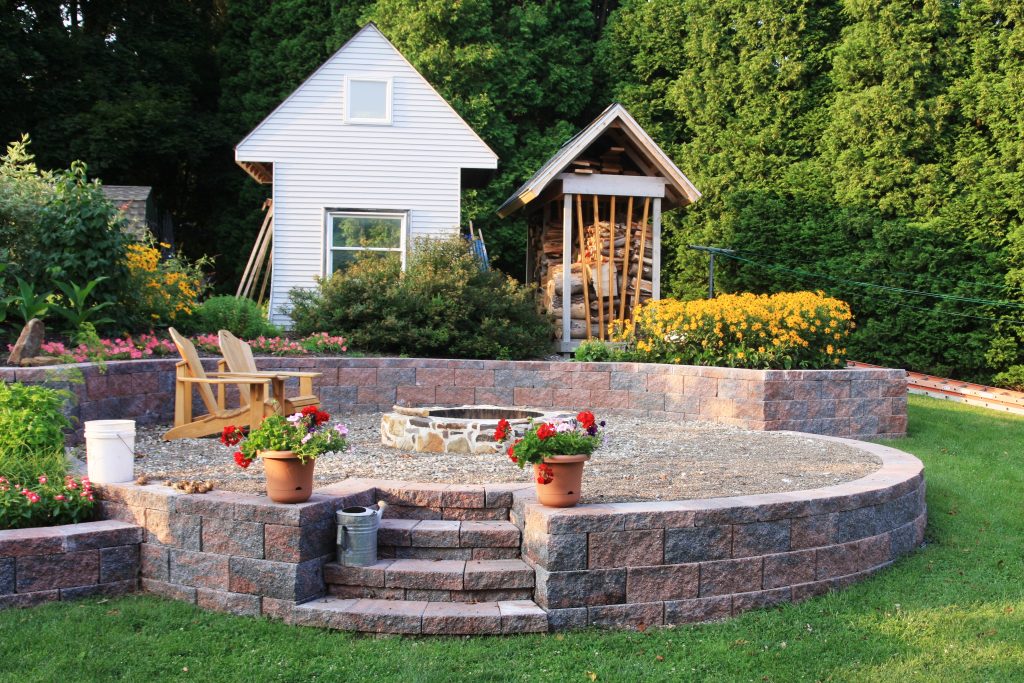
A retaining wall usually starts as a problem to solve. Soil is washing out after storms, a slope is too steep to use or the yard drops off right behind the patio. But a wall does not have to look like a wall. With the right design, it becomes one of the best-looking parts of the landscape.
We build retaining walls for homeowners in Southlake, Colleyville, Keller and nearby cities, and the best ones balance strength with good looks. Here are the retaining wall design ideas we recommend most, plus the practical details that keep them standing.
Most walls start with one of three needs:
If water is the main concern, the wall is only part of the answer, because the soil behind it has to drain properly. We cover that below, and our guide to fixing drainage issues in sloped yards goes deeper.
Stone gives a timeless, natural look that suits nearly any home. Irregular shapes and earthy tones help a wall blend into the landscape. Stone is a strong, long-lasting choice, and the stacking takes real skill to get right.
On a steep lot, one tall wall can feel heavy and imposing. Two or three shorter walls stepped back from each other spread the load, look softer and create planting levels or seating ledges. Tiered designs are a favorite for turning a difficult slope into a garden.
For a clean, uniform look, interlocking block or paver walls match well with patios and walkways. They go up quickly and come in many colors and textures. See how they fit with outdoor flooring in our paver patio installation work.
Short walls double as raised beds, giving your plants better soil and your yard more definition. They also make planting and upkeep easier on your back.
Large natural boulders can hold back a small slope while looking like they have always been there. They work well in informal, naturalistic yards. Learn more about our natural boulder work.
A low wall at the right height becomes extra seating. Pair one with a fire feature and you have a gathering spot, which we cover on our fire pit and stone wall page. Our blog on retaining walls that double as outdoor living features has more ideas for this.
The best design depends on a few practical factors.
If you are not sure where to start, our landscape design team can sketch options that fit your yard.
Beautiful walls fail when water builds up behind them. Wet soil is heavy, and the pressure can push a wall out, crack it or tip it over. A well-built wall includes gravel backfill and a drainage path so water escapes instead of pushing.
Think of it this way: if your yard already has standing water or soil that washes out, fix that at the same time. We often pair walls with a French drain or broader drainage solutions, and we may add erosion control planting on the slope above or below.
A retaining wall is not a weekend project. The base, the backfill and the way each course is set decide whether it lasts. Taller walls may also need engineering, which is something we look at during the site visit. Cutting corners can lead to leaning, bulging or collapse, which is far more expensive than building it right the first time.
When you work with a professional retaining wall installation crew, you get a plan for the foundation, the drainage and the finish, all in one.
Every wall is priced differently, so be wary of a quote that does not look at your yard. The biggest factors are wall height and length, the material you choose, how much excavation and backfill the site needs and whether access is tight. Drainage and engineering add to the scope, but they also protect the investment. Ask for an itemized estimate so you can see where the money goes and where you can adjust.
Small details lift a wall from functional to beautiful:
If you are searching for retaining wall contractors near me, look for a company that walks the slope, talks about drainage and shows finished walls. W5LC Landscape is a Southlake family business that builds walls for neighbors across the area. You can see past work in our project gallery and get to know the team on our About Us page.
Our estimates are free and often same-day, our pricing is clear and a design fee is credited if you build with us. When you are ready, request your free retaining wall estimate and we will take a look at your yard.
Natural stone, interlocking blocks and pavers all perform well. The best choice depends on the height of the wall, your soil and the look you want.
Requirements vary by location and by the wall's height and load, so the answer depends on local rules. We review this at the site visit and tell you if engineering is needed.
Yes. Water behind a wall adds pressure and is a common cause of failure, so proper backfill and drainage are essential.
A wall built on a solid base with good drainage can last for many years. Poor prep and trapped water shorten that life.
It can stop soil from moving on a slope, but often works best alongside drainage and erosion control that address where the water is coming from.
Yes. A wall built at the right height with a smooth cap can double as a bench or ledge.

A retaining wall can do more than hold soil — it can reshape your entire landscape. Contact W5LC Landscape today for a free estimate and discover how the right design can bring new life to your outdoor space.